









What to Wear for a Day on a Private Yacht in Miami
Almost every booking gets the same question a few days out, usually by text, usually from whoever's organizing the group: what does everyone wear? It's a fair thing to wonder about, since a yacht doesn't fit neatly into "beach" or "dinner reservation," and most people's closets are built around one of those two categories, not something that sits in between.
You don't need much. Soles that won't scuff a deck. Fabric that dries in twenty minutes instead of staying damp for three hours. And more sun protection than a normal beach day calls for, because water throws light back up at you in a way sand mostly doesn't. Past that, wear what you'd wear anywhere else in Miami in July.
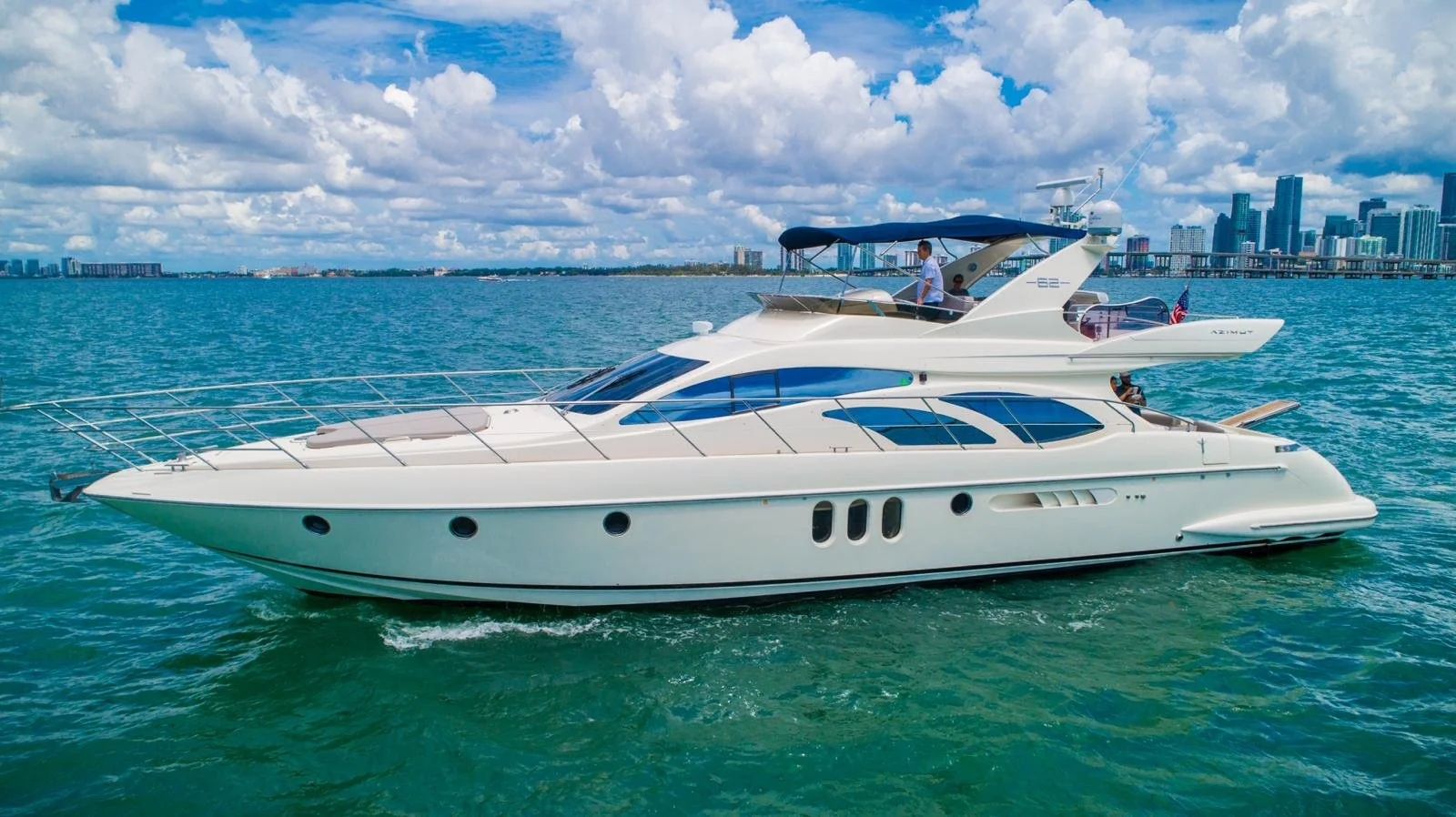
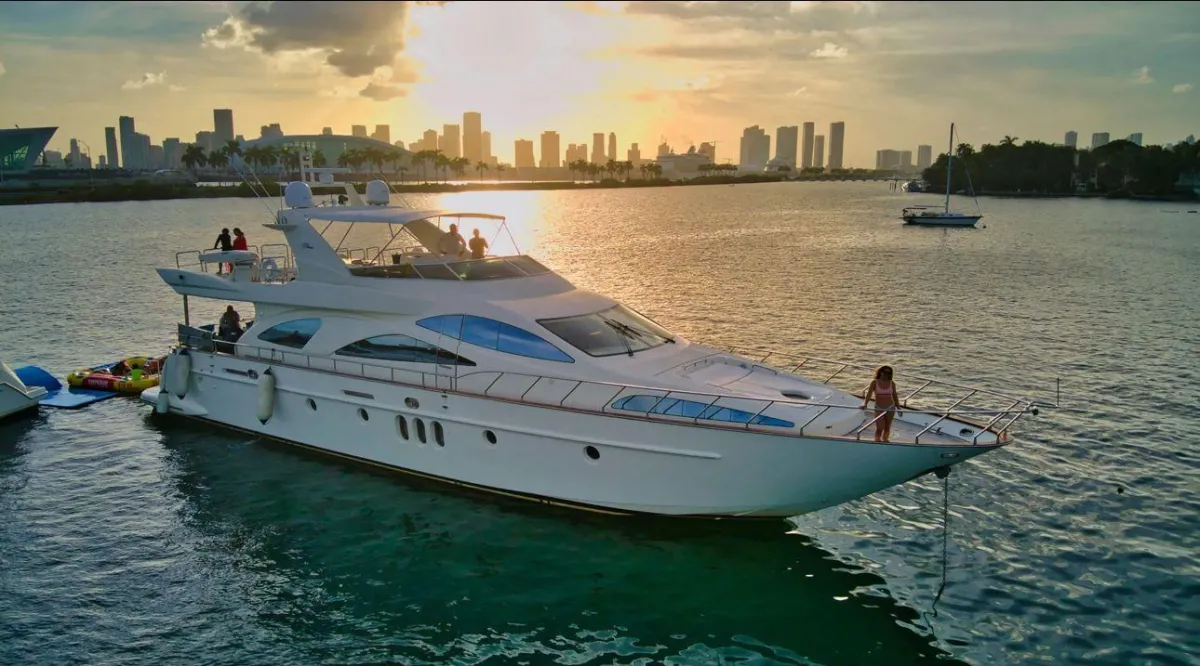
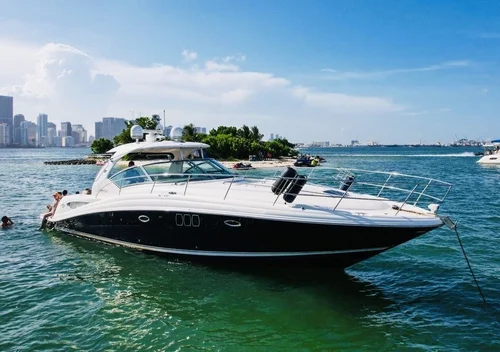
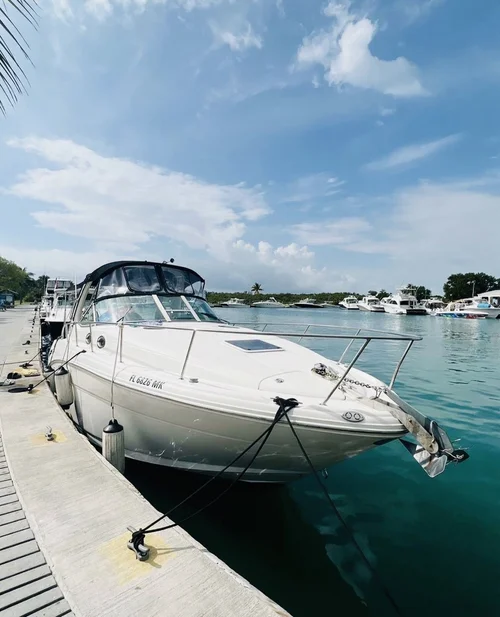
Choosing the right yacht for your group actually factors into this more than people expect, since a smaller boat with less shade means packing more sun coverage than you would for a bigger one with a shaded salon to duck into. What's included in a Miami yacht rental with a captain covers towels and the basics, so you're not packing for every possible scenario. And if the day's building toward something bigger than a casual afternoon, what luxury actually looks like on a private yacht in Miami is worth a read first, since it tends to shift what people end up packing.
Jump To:
Morning, Midday, and the Hour After Sunset
The Sun Is Worse Than It Looks Out There
A Few Things to Just Leave Home
Worth Tossing In: A Cheap Dry Bag
Soles Come Before Style
Rubber soles, or bare feet once you're settled. That's really the only non-negotiable on this whole list. Heels, hard leather soles, anything with a sharp edge that could dig into the deck, all of that stays in the closet, and not because someone's being precious about the boat. Gel coat scratches easily, and after a few years of keeping a deck looking sharp, a captain notices a scuff mark almost immediately.
Boat shoes work fine. So do sandals with real tread. Sneakers are okay too, assuming nobody minds them getting a little wet. Flip-flops are the one that trips people up, since they tend to slide off within the first twenty minutes of anyone moving around much, and most guests just end up barefoot by then anyway.
Skip the Cotton
Cotton feels great right up until it gets wet, and then it just sits there, heavy and clingy, for the rest of the afternoon. A splash does it. So does sweat, honestly, on a hot enough day. Quick-dry fabric skips that problem entirely, and so does linen, or a swimsuit built to be worn for hours rather than the twenty minutes people usually spend in the water.
Color matters more than most people think about ahead of time. A black shirt that felt totally fine on the drive to the marina can feel noticeably warmer an hour into a Miami afternoon, since dark fabric holds heat that lighter colors just don't. That doesn't mean dressing boring. Loose linen in a pale color tends to photograph better anyway, so for once the easier choice and the better-looking one are the same thing.
Morning, Midday, and the Hour After Sunset
Mornings run cooler than people expect, so a light layer over swimwear at seven or eight a.m. isn't overkill. It's just sensible until the sun's properly up over the bay.
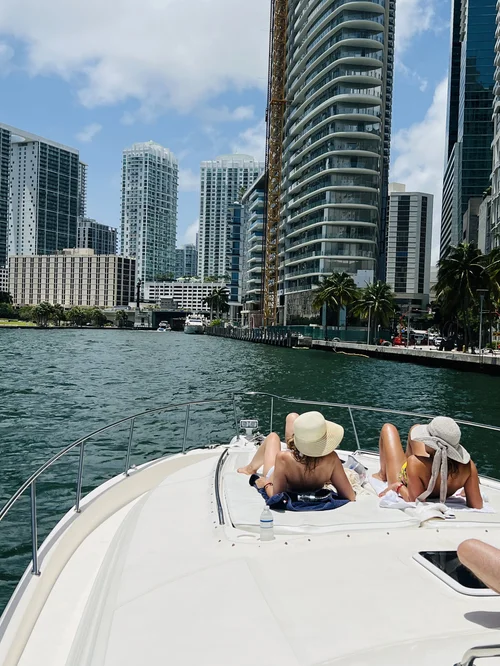
By noon that layer's coming off. The deck's warm underfoot at that point, and this stretch of the day is when sun protection matters most out of any hour on the charter.
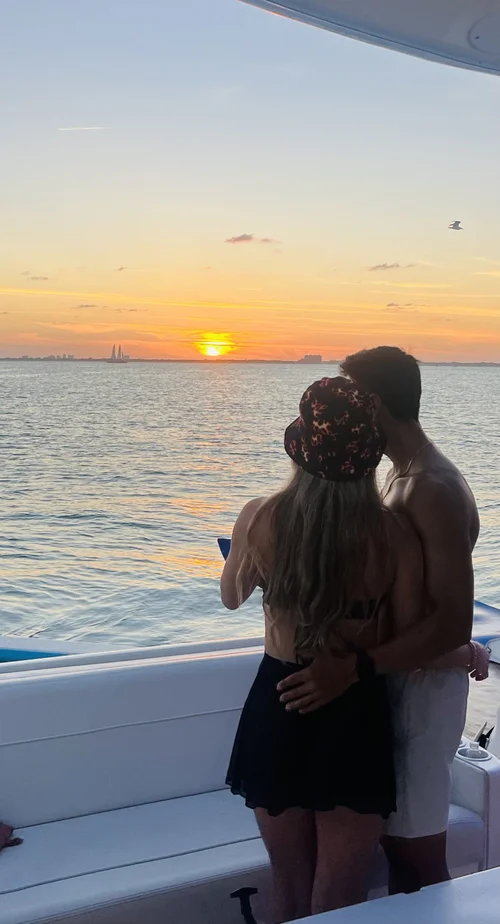
Sunset flips the whole thing again. Wind picks up right as the sun starts dropping, and temperatures fall faster out on open water than they do on land, where buildings usually block most of it. That sweater that felt completely unnecessary at three in the afternoon suddenly earns its spot in the bag by six.
The Sun Is Worse Than It Looks Out There
Sunscreen's the part everyone remembers. What catches people off guard is how much stronger the exposure is once you're on the water, since light bounces off the surface and hits skin from two directions at once instead of just from overhead. The EPA's UV Index guidance gets into this directly, how reflection off water and pale surfaces meaningfully increases exposure compared to standing on solid ground, which is a big reason people come home from a full day out here more sunburned than they planned on.
A hat with an actual brim helps more than a cap does. A light long sleeve is worth packing if you burn easily. Sunglasses that genuinely block UV, not just tint the glare down, are worth the extra ten dollars over whatever's sitting by the gas station register. None of this has to look clinical either. A linen button-down thrown over swimwear does the job and still looks like it belongs on a boat instead of a hospital.
Two Different Packing Lists
A short charter needs almost nothing. Swimwear, a cover-up, sunscreen, sunglasses, and you're set.
A full day on the water is a completely different list. Bring a full change of clothes for after anyone swims. Bring a second layer for once the wind shifts later in the afternoon. Bring something for the slow middle stretch when nobody's doing much and the sun's working overtime, even though half the time that extra layer never leaves the bag at all. People who've done a full-day charter before tend to pack lighter and smarter the second time around, mostly because they've already learned what they didn't need.
Nobody Remembers the Sweater
This one gets almost everyone at least once. It's eighty-five degrees at three in the afternoon and a jacket is the last thing on anyone's mind. Then the sun goes down, the wind comes straight off open water instead of getting blocked by a building the way it would on land, and it's noticeably colder within about twenty minutes.
A sweater. A wrap. Even a denim jacket folded flat in a bag takes up almost no room and gets used more often than you'd guess. Whoever forgets it the first time doesn't forget it twice.
A Few Things to Just Leave Home
Heels, obviously, for the same reasons already covered. White or very pale bottoms are a real gamble too, since teak decks and boat cushions aren't always spotless, and a little dirt or a drink spill shows up fast on light fabric in a way it never would on darker colors. Heavy jewelry that could slip off during a swim isn't worth the risk either, and honestly, if losing something overboard would genuinely ruin the day, it's better left at home entirely.
Stiff, structured clothing is the other category worth skipping. A boat moves constantly, and people are sitting, standing, and climbing in and out of the water all afternoon. Clothes built for sitting still at a dinner table don't flex the same way clothes built for actual movement do, and it shows by hour two.
Worth Tossing In: A Cheap Dry Bag
Phones go overboard more often than anyone likes to admit, and so do sunglasses, room keys, and the occasional wallet, usually during a swim stop when somebody forgets what's still sitting in a pocket. A small dry bag solves most of that. Rolls shut, clips to a rail or a seat, costs about fifteen dollars, and barely takes up any room in a beach bag.
It's not required. No one's checking for one at the dock or asking why you didn't bring one. But talk to anyone who's watched a phone sink past the point of getting it back, and a dry bag stops sounding like an optional extra pretty quickly.
Kids and Grandparents on the Same Boat
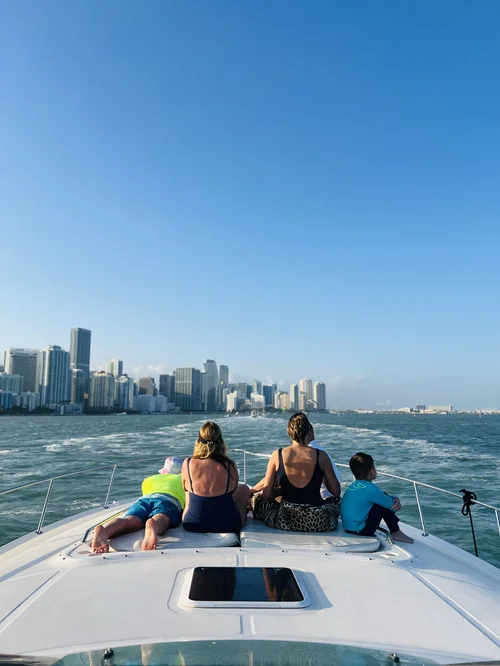
Kids need swimwear they can move in without a fight over it, shoes with real grip, and an extra change of clothes, since they'll spend most of the day wet rather than dry. A rash guard cuts down on how often sunscreen needs reapplying too, which matters a lot when nobody's excited about chasing a seven-year-old around the deck with a spray bottle every twenty minutes.
Grandparents tend to do better in supportive sandals than in flip-flops, and a wide-brim hat beats a baseball cap here, since it covers the ears and the back of the neck and not just the face. Comfort wins over style for this age range every time. Most families figure that out by the second trip if they didn't already know it going in.
Frequently Asked Questions
Can we just wear regular sneakers?
Sure. Clean soles, light-colored rather than dark rubber, and you're fine.
Is swimwear enough for the whole charter?
For most of it, yes. A cover-up helps for lunch or once you're docked, but it's not a requirement by any means.
Do we need to bring towels ourselves?
Not usually, since they're typically included. An extra one for a swim stop doesn't hurt though.
What happens if it turns out colder than expected?
Layer up before you leave, not after you're already cold. A sweater you never end up needing costs you nothing to bring along.
Are hats a must?
Not required, no, but they're strongly recommended for anyone spending more than an hour or so in direct sun.
Should everyone bring a full outfit change?
For a full-day charter, yes. For a shorter two or three hour cruise, only really necessary if there's a swim stop on the plan.
Is there anywhere to keep valuables safe?
Most boats have space below deck or in a cabin for that. Worth mentioning ahead of time if you're bringing anything you'd hate to lose.
Dress for the Water, Not the Dock
None of this needs to be complicated once the basics click. Rubber soles, light fabric, real sun protection, and a layer for once the sun drops lower than expected. Message Blue Ocean Life on WhatsApp with the date, and they'll help sort out anything else before you even step aboard.